
The Hypnosis Training for Success in Practice
Learn hypnosis from the professionals
Whether for your career or personal growth: the ability to hypnotize successfully makes the crucial difference. With 30 years of combined experience from the instructors, and building on 40 years of hypnotherapy practice by Dr. Erich Zulauf, you'll learn the hypnosis that actually works in practice.

What you'll learn
- Recognizing, inducing, and individually guiding trance
- The utilization principle: using symptoms and personal traits as resources
- Transneuronal speaking for neurobiological anchoring
- Hypnosomatics: body dialogue & immune system support
- The WSK format for transforming earlier developmental stages
- Erich’s 4-Steps Format for confidence & peak performance
- Hypnotic phenomena (analgesia, levitation, ideomotor responses)
- Designing personalized, script-free hypnotherapy
What will I learn in the training?
Hypno 1: Practitioner
Fundamentals of Trance & the Utilization Principle
- Creating, guiding, and deepening trance
- Pacing & leading across all sensory channels (VAK)
- Ideomotor signals & analog unconscious communication
- Erich’s 4-Steps Format & hypnotic analgesia
Hypno 2: Master
Hypnotherapy, Holosphere & Hypnosomatics
- The WSK format («How Do I Tell My Child?»)
- The Reach-in format for psychosomatic topics
- The Holosphere & activating core well-being
- Seekers of the Lost Treasure & Conversational Hypnosis
Hypno 3: Pro
Transneuronal Worlds, Ecology & Hypnotic Craft
- Transneuronal speaking («Finding the Third»)
- Hypnopacing, mirror neurons & «Du-Trance»
- Allergy decoupling & immune system rebalancing
- Multiple Hypno-Tapping («Hypno - Mumbo Jumbo»)
Exclusive EZC Training Methods
Our diploma program is based on over 40 years of development by Dr. Erich Zulauf. Instead of rigid scripts, you will learn dynamic formats that combine neuroscience insights with deep therapeutic practice.
Transneuronal Speaking
«Finding the Third»
Learning happens at the level of dendrites and synapses. Through rhythmic transneuronal speaking, we weave solution prompts, metaphors, and posthypnotic suggestions together so that the client’s brain forms lasting neural reconnections.
The Holosphere & Core Feeling
Felt Atmosphere of the Organism
Health and well-being depend significantly on the felt inner atmosphere of the organism. In this training, you will learn to activate this homogenous core feeling in clients — the key for psychosomatic issues and self-healing.
The WSK Format
«How Do I Tell My Child?»
A gentle, highly effective approach to reordering formative experiences from earlier life stages. Instead of analytically picking apart old wounds, the client enters a resource-rich dialogue with their younger self in trance.
The Reach-In Format
Hypnosomatics & Body Dialogue
Physical symptoms often speak their own symbolic language. The Reach-in format enables targeted communication with unconscious and bodily processes — from pain regulation to supporting the immune system.
Erich’s 4-Steps Format
Top Performance & Confidence
A versatile high-performance format for exams, public speaking, executives, and athletes. It combines core strength, reference resources, and memory access into a reliable goal trajectory.
Hypnopacing & Du-Trance
Empathic Trance Synchronization
Hypnosis is a shared experience. You will learn how to use your own trance state as a therapist to tune precisely into your client’s rhythm via mirror neurons and uncover intuitive solution pathways instantly.
The two hypnosis instructors
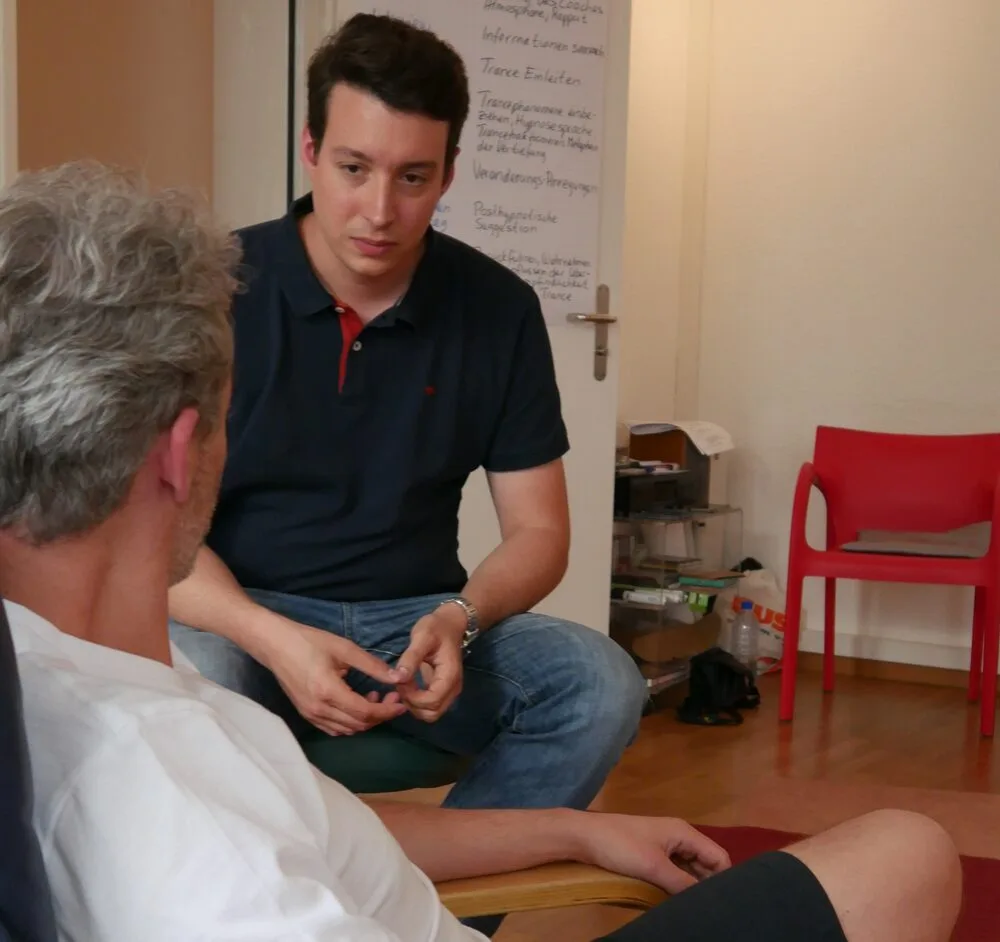
Jan Mion
Hypnotherapist and trainer at Mion Hypnose
Jan Mion discovered hypnosis for himself while studying psychology, when he attended the hypnosis training led by Dr. Erich Zulauf.
Through further education and training, he became the youngest recipient of the EZC 3-star and hypnosis trainer diploma.
With this knowledge and experience he built a successful hypnosis practice and successfully treats psychological and physical issues of all kinds. These successes have made him known beyond Switzerland's borders.
When outside circumstances forced him to work online, he further developed the methods of online hypnotherapy and now works with clients from all over the world over the internet.
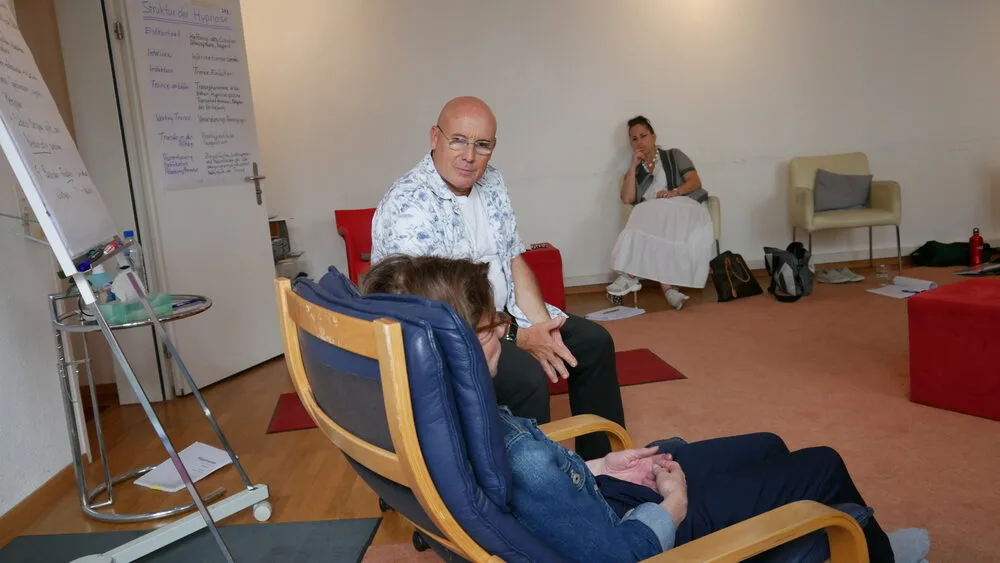
Michael Schmidt
Hypnotherapist and trainer at Schmidt Hypnose
Unfulfilled by his work as a successful CFO and foreign-exchange and commodities-futures trader on the international markets, Michael Schmidt decided there had to be more to life. His search for that certain something took him around the world.
He visited Indian gurus, shamans, healers, and places of power across the globe, assisted Tony Robbins, and eventually landed with Dr. Erich Zulauf and hypnosis.
With his talent and empathy he has successfully used hypnosis for therapy since 2001 and has led seminars on various topics.
Personal consultation about the hypnosis training
If you're interested in our hypnotherapy training, you can book a no-obligation consultation here.
Request a call-backTraining formats
Different aspects of learning need different formats. Learning hypnosis well takes essentially four different methods. That way you get all the important aspects for successfully applying hypnosis and hypnotherapy: knowledge, experience, intuition, and positive experiences.
Theory
- Transmitting knowledge
- Processes and in-depth information
- Complementing the script
Demonstration
- Exercises demonstrated by the instructors
- Learning by example
- Questions to hypnotist and subject
Group exercises
- Hypnotizing yourself
- Exercises on various topics
- Gathering experience and feedback
Group trance
- Deepening what you learned
- The complete experience of hypnosis
- Strengthening group dynamics
Hypnosis training costs
1 payment
Total 5'500 CHF
6 payments of
first instalment due in advance
Total 5'500 CHF
11 payments of
first instalment due in advance
Total 5'500 CHF
The full price breaks down as follows:
- Hypno 11'500 CHF
- Hypno 21'500 CHF
- Hypno 32'500 CHF
The course parts can also be booked individually.
The path to becoming a hypnotherapist
Hypno 1 — Practitioner: learning to hypnotize as a beginner
Prerequisite: none
In this first course you'll discover the world of the unconscious and the possibilities of trance. In the first days you'll learn to hypnotize yourself and others. Along the way you'll be taught hypnotic language and the knowledge behind hypnotic phenomena.
Hypno 2 — Master: learning hypnotherapy
Prerequisite: 7 days of prior hypnotic training (e.g. OMNI, NLP, etc.)
The second course begins teaching hypnotherapy: finding potential for change in trance, recognizing unconscious causes, and prompting change while in trance. You'll also learn to positively influence the conscious/unconscious relationship, and what hypnotic change really requires.
Hypno 3 — Pro: medical and clinical hypnosis
Prerequisite: Hypno 2
In the final course, you're given all the skills to successfully apply hypnosis in therapy. The applications covered are both physical and psychological in nature, and you'll learn to tailor a hypnotherapy session to the person in front of you.
Hypnotherapy training
If you want more than just becoming a hypnotist, the Hypno 2 and Hypno 3 parts are even more valuable. Here you're taught the hypnotherapeutic approaches that have proven themselves in practice over the years. The best hypnosis training is only as good as the problems its graduates can solve. Therapy can be split into two areas.
Clinical hypnosis
A comprehensive hypnotherapist training isn't possible without teaching the psychotherapeutic application. Even if some people rely too heavily on labels, our hypnosis courses are also training in clinical hypnosis. Because we're not big fans of overly strict diagnoses, certain aspects of psychological issues are discussed in general terms rather than named specifically. This approach has proven itself: it gives laypeople the right framework and professionals the most effective tools.
Medical hypnosis
Another rewarding field for hypnotherapy is the medical one. The findings and developments of Dr. Erich Zulauf are world-leading, particularly in medical hypnosis. We make sure our content is based both on scientific findings and on medical clearance. For example, we teach hypnotic pain suppression for chronic pain, but we always stress that these methods should only be used after medical clearance and as a support measure. We're grateful to conventional medicine and want to complement it where clear gaps exist. We regularly have doctors in our hypnotherapy trainings who have been very satisfied with our content.
Learning hypnosis from the ground up
Hypnosis is a wide-ranging field — so wide that some say almost everything that works is hypnosis. From the deliberate placebo effect to experiencing other states of consciousness, hypnosis is scientifically grounded and yet seems almost magical at the same time.
That's why our goal in this training is to do justice to "both, and": good hypnosis training combines subjective experience with objective theory. That's exactly what we've set out to do — offer the most complete training in hypnosis.
Whatever your reason for learning hypnosis, there's something here for everyone. We've even jumped over our own shadow as hypnotherapists and introduce elements of stage hypnosis — not to apply them therapeutically, but so you can experience and learn the full spectrum of hypnosis. These parts are minor, though; we focus most of our energy on therapeutically effective hypnosis and self-hypnosis.
Hypnosis course: content in detail
The content of the hypnosis training is as varied as hypnosis itself.
Learning to hypnotize
Applying hypnosis involves several skills. You'll learn to bring someone into hypnotic trance using hypnotic inductions, and it's usually important to deepen that trance, for example through hypnotic phenomena. It's said that you cannot not communicate. It's also said that the unconscious is always listening — which means, fundamentally, that everyone "hypnotizes" in everyday life too. Noticing where and how this everyday hypnosis works is, for us, part of really learning hypnosis. Because hypnosis isn't only found in formal trance with closed eyes.
Holistic hypnosis
A core aspect of our hypnosis training is meeting clients within their own trance experience. That's why we place value on learning to perceive the person in hypnosis as a whole, rather than fixating only on the problem. Even where certain basic principles are similar, not everyone with the same problem is the same. When you let the client's personal experience flow into the hypnosis, the effect can be many times greater. In our courses you don't just memorize a script for a given problem — you learn to read clients hypnotically, drawing not only on the structures and formats from the courses but on your full conscious resources: experience, knowledge, and imagination.
The language of the unconscious
Participants of the Hypno 1–3 courses repeatedly mention how important learning hypnotic language was. This is language that is inherently hypnotic — that fosters trance. Unlike everyday language, hypnotic language is designed to communicate directly with the unconscious. While other courses often just change the tone of voice, here you learn the actual language of the unconscious.
Hypnotic atmosphere & Hypnosomatics
Dr. Erich Zulauf's more than 40 years of experience treating physical symptoms led to the development of the so-called "Hypnosomatics" formats. Treating physical symptoms with hypnosis is still uncharted territory in many places — but in the Hypno 1–3 courses it's a regular part of the training. More and more research into the "body-mind" connection shows that the psyche as a whole has an influence on health. These are exactly the aspects we address and teach — not as competition to conventional medicine, but as a complement to it.
Transneuronal speaking & brain plasticity
Lasting therapeutic change requires neurobiological reconnections in the brain. With transneuronal speaking, we provide a language format that weaves posthypnotic suggestions and solution metaphors in rhythm with the brain. This gives synapses and dendrites the optimal time-frame structure to firmly embed new response patterns.
Hypnosis training in Switzerland
The hypnosis training takes place in Zurich, at Ilgenstrasse 4, 8032 Zurich. The venue is easily reached from the main train station via tram line 3. Parking is available on request.
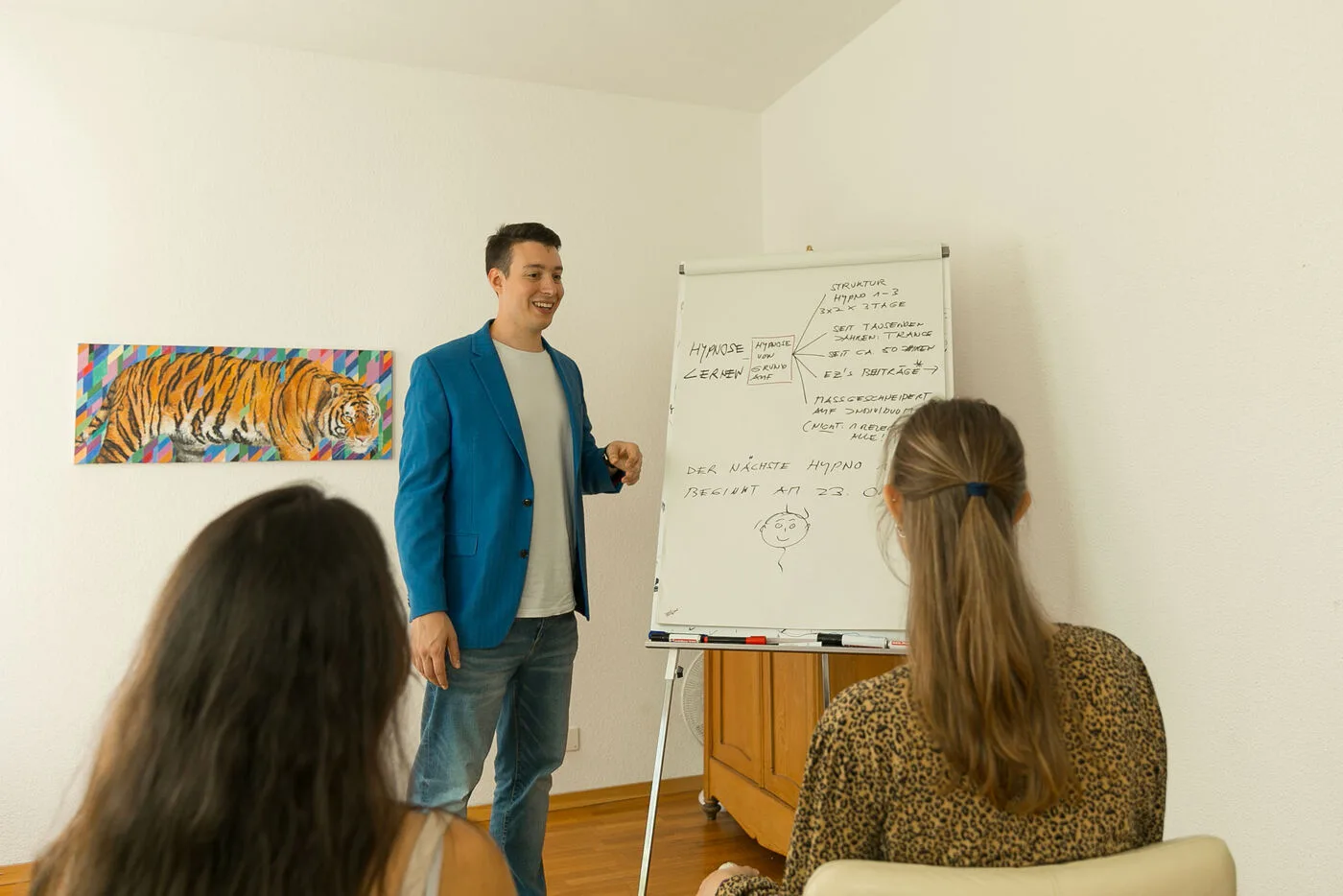
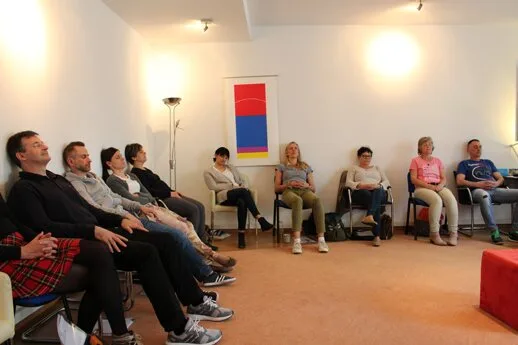
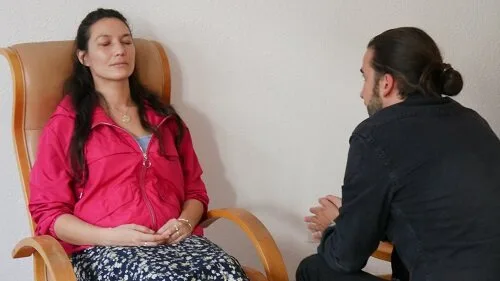
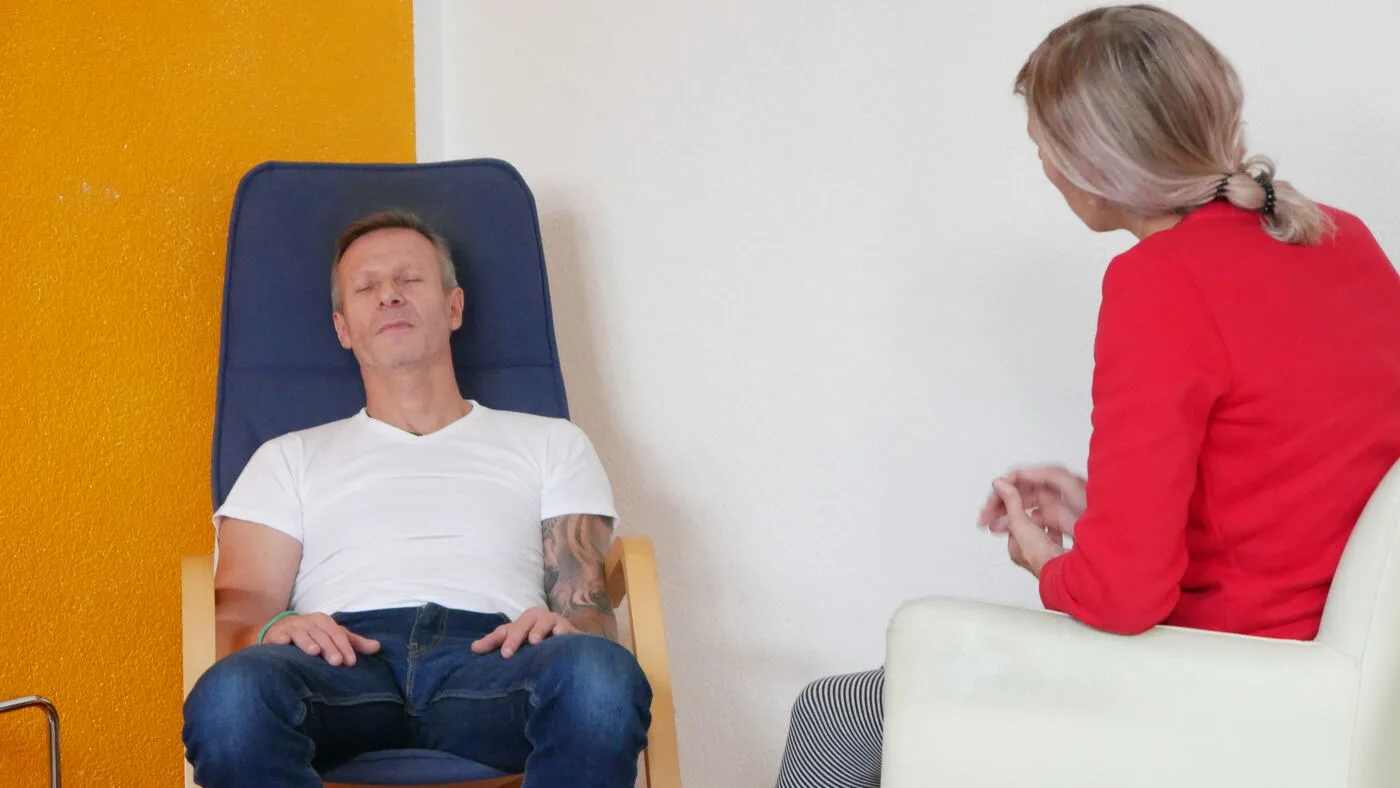
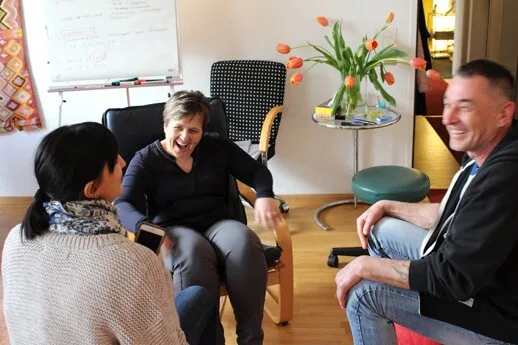
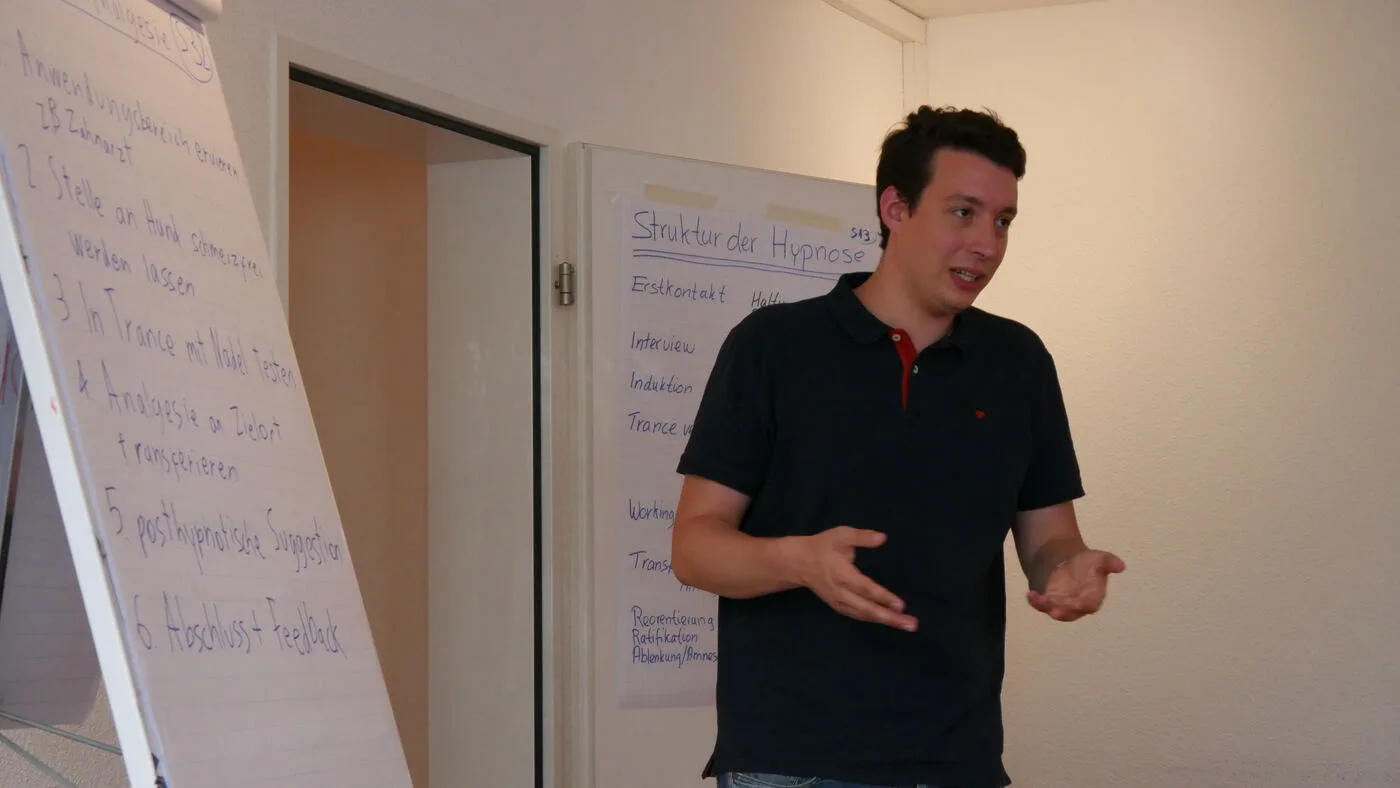
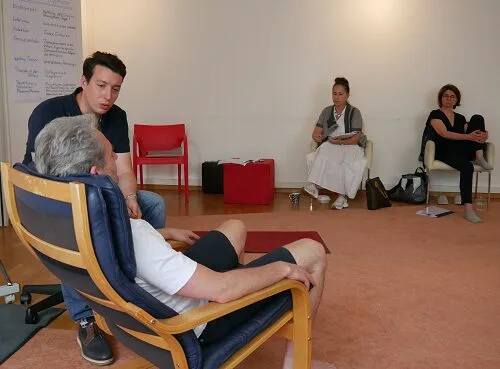
Impressions from the training
Questions about the hypnosis training
Do I need prior knowledge for Hypno 1?
Can I book the course parts individually?
What sets the EZC diploma training apart from other hypnosis courses?
What does «Hypnosomatics» mean and how does it work for physical issues?
What is «Transneuronal Speaking»?
Should a hypnosis training program last longer than 7 days?
Does a hypnosis training make sense for coaches?
Does a hypnosis training make sense for psychologists?
Does a hypnosis training make sense for nursing staff?
Will I receive support for starting my own practice?
What does the training conclude with?
How can I pay for the training?
Where does the training take place?
Ready to become a hypnotherapist?
Book a no-obligation consultation and find out whether the hypnosis training is right for you.
Enroll now