Mion Hypnose

Hypnosis for Gambling Addiction

Being able to stop, even when the next round is calling.

The pull sits in the near-miss, not in the money. That coupling is exactly what we undo in trance.

Book an appointmentOnline worldwide

5.08000+ Sessions · since 2015 in private practice

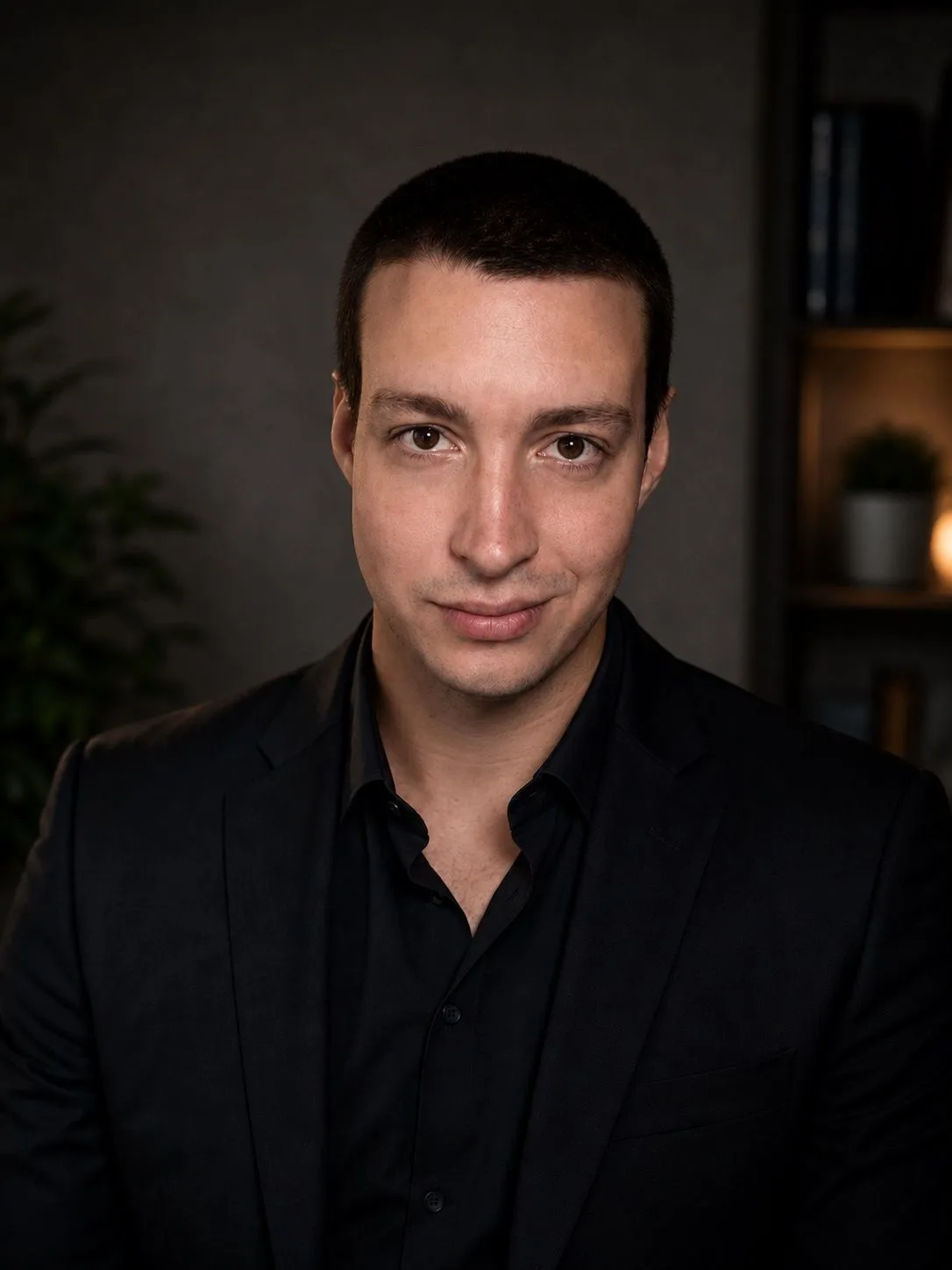
Jan Mion, Hypnotherapist EZC
Jan Mion
Hypnotherapist EZC
Hypnosis for gambling addiction works on the learned coupling between the near-miss and playing on — and on whatever else the gambling regulates. With existential debt, debt counselling belongs alongside it. Usually two to five sessions at 200 CHF each.
  • 2–5 Sessions Typically
  • 60 min per Session
  • Lasting Cause-Oriented
  • Online Worldwide
How It Works

How Hypnosis Addresses Gambling Addiction

The pull of gambling rarely sits in the money itself — it sits in the near-miss, the moment right before the result, when your brain reacts with a disproportionate rush of feel-good hormones. Your unconscious learns that coupling fast: gambling becomes the easiest way to get that feeling.

Over time, a kind of gambling trance develops, where much of it runs on autopilot and the conscious mind barely gets a say — many describe feeling "like a different person" while it's happening. That's why willpower alone often isn't enough: "I know I should stop, but I can't" is the sentence I hear most often with this issue.

In trance, we go straight at that coupling and essentially reset the reward centre — so gambling loses its place as your unconscious's go-to tactic.

What gets you hooked is rarely the game itself — it's the moment right before, when anything still seems possible.

In Detail

Why the Unconscious Loves the Near-Miss

As with other addictions, hypnosis can help with gambling addiction — meaning addiction to games of chance, not to computer games. Since pathological gambling now falls into the same category as substance addictions, the treatment approach is similar too.

The Hypnotic View of Gambling Addiction

To understand why some people sacrifice so much for gambling, and in the process distort their whole sense of reality, you have to understand how the unconscious works in a situation like this. The unconscious is fundamentally geared toward survival — and that includes taking the easiest path to resources. That's why, in some people, it rewards a win with a disproportionate rush of feel-good hormones.

Many people who've developed a gambling addiction describe an initial winning phase — the first wins, and the rush of happiness that came with them, are often the first step toward addiction. For the unconscious, gambling becomes an easy way to get satisfaction. The excitement and tension involved can also be used remarkably well to cover up other things or balance out negative feelings — caught up in the urge to play, people often forget everything else.

A kind of gambling trance sets in, where much of it runs on autopilot and the conscious mind barely gets a say anymore — which is also why gambling addiction is classified as an impulse-control disorder. Many people describe feeling "like a different person" while it's happening. Gambling or betting increasingly becomes the unconscious's main tactic for balancing out problems — no wonder thoughts increasingly circle around the game.

The More, the More

The more gambling takes over a person's life, the more it becomes part of their identity too — people brag about wins and play out the ideal image of a winner. Yet every game of chance, whether in a casino or online, from roulette to scratch cards, is designed so the house comes out ahead over time and the player ends up behind. Play long enough, and you almost always lose — with correspondingly growing financial consequences, and sometimes the first signs of despair.

So what has the unconscious picked as the perfect solution for those negative feelings? Gambling itself. That creates a vicious circle of negative feelings and an increasingly failing attempt to compensate for them — the more you lose, the more you play. The reality of the losses has to be talked down more and more, and many people believe they can make up for losses with future wins. The fact that this is statistically next to impossible stops mattering, because the conscious mind has lost its influence.

On top of that, the system gets used to the excitement: it takes higher and higher stakes to reach the same level of tension, and more and more money has to be found — begging, borrowing and stealing included. Relationships often break down in the process, which deepens the isolation further and blocks off possible ways out.

The Course Isn't Always a Straight Line

A gambling addiction doesn't always steadily get worse — in the lives of many people affected, episodes of crashing and catching themselves alternate. But once these patterns are set in the brain, they're hard to shake. The risk of relapse remains until the unconscious is convinced of a different tactic and has learned new routines — only a change from the ground up leads out of gambling addiction. Where the conscious mind alone can't manage the necessary change, hypnotherapy offers a good route to real progress.

How the Treatment Works

Whatever stage of a gambling career you're at, hypnosis offers ways to treat gambling addiction, much like it does with substance addictions. At its core, the unconscious needs to be convinced it no longer craves gambling. Since the unconscious part differs from person to person, the exact process looks a little different each time — but certain elements keep coming up.

With gambling-related addictive behaviour, there's often a split between the conscious mind and the unconscious parts — it usually shows up in the sentence "I know I should stop, but I can't." In cases like this, the unconscious is still too much at the helm, and the impulses aren't yet sufficiently controlled. In hypnosis, all these parts can connect with each other: through more direct communication, the conscious mind regains some control, while the unconscious is, at the same time, brought a little closer to logic — which creates better understanding and often noticeable stress relief too.

Once some control is back and the hole isn't being dug any deeper, gambling can genuinely come to an end. To get there, it's usually replaced with something positive — hypnotherapy often uses this to essentially reset the reward centre. After that, different routines are practised in the unconscious to break the old pattern: gambling loses its place as the go-to tactic, and the reward in the brain gets reduced or dissolved altogether.
Game pieces and an open book on a table
In Focus

It isn't the next round that decides. The coupling behind it does.

The Change

What Everyday Life Feels Like Without Gambling Addiction

Not fighting the urge for the next round. A mind that's back at the helm.

  • An evening where gambling isn't a topic
  • Thoughts that no longer circle the game automatically
  • Money and relationships that are no longer at stake
  • An outlet for tension that doesn't run through a bet
Who It's For

Who Is Hypnosis for Gambling Addiction Suited For?

Hypnotherapy is a good fit for people where the conscious mind is no longer at the helm when it comes to gambling.

  • "I know I should stop, but I can't" — that sentence describes exactly how you feel.
  • You've quit before and relapsed more than once, often after a near-miss or during a hard stretch.
  • Your thoughts increasingly circle around gambling, even when you're not playing.
  • Financial or relationship consequences are already showing, but gambling still feels stronger than your will to stop.

With existential debt from gambling, debt counselling belongs alongside this — hypnosis works on the psychological side of the addiction, not on financial recovery. And as everywhere: hypnosis doesn't work against your own will.

In a Session

What Happens in a Hypnosis Session for Gambling Addiction

Two to five sessions is the usual range. We book one at a time.

  1. 01
    When the pull starts
    I don't ask you how much you gamble, but when: what mood, what situation comes before it?
  2. 02
    Winding down
    You get comfortable, and I guide you into a calm, focused trance. You stay awake and responsive.
  3. 03
    Dissolving the coupling
    We work on the connection between the near-miss and playing on, and give your unconscious a different tactic for balance.
  4. 04
    Coming back and making sense of it
    You come back refreshed, with noticeably more distance from the urge to play.
Online or In Person

Hypnosis for Gambling Addiction — online or in the practice

From home or in the practice in Zurich — the effect is the same.

In Person in Zurich

In-person sessions in Zurich. The current room is shown when you book.

Serious Hypnosis

Serious Hypnotherapy for Gambling Addiction

Honest work on the coupling, not on willpower.

What People Say

If you really want to, you just stop.

Serious therapy

With gambling addiction, the conscious mind is often no longer at the helm — "I know I should stop, but I can't" is exactly that pattern. Willpower alone is rarely enough.

What People Say

You can win back what you lost with the next round.

Serious therapy

Every game of chance is designed so the house wins over time. That very thought is one of the distortions we work on.

What People Say

Gambling addiction isn't a real addiction like substances.

Serious therapy

Pathological gambling is now classified in the same category as substance addictions — tolerance and addiction memory work in very similar ways.

What People Say

One session, and the urge is gone.

Serious therapy

Rarely. It usually takes two to five sessions before the new reaction sits as reliably as the old one.

Will It Work for Me?

How Many Sessions Are Typical for Gambling Addiction

Hypnotherapy works for almost everyone who engages with it. How quickly it goes depends mainly on how long the coupling has been running and how many areas of life it's already affected.

Often Goes Quickly
2–3 sessions

The gambling has a clearly identifiable trigger and isn't years old yet.

  • You can name when it started
  • Financial consequences are still manageable
  • A clear wish to stop
The Usual Case
3–4 sessions

Episodes of crashing and catching yourself have been alternating for a while.

  • Quit and relapsed more than once already
  • Thoughts increasingly circle the game
  • Relationships are visibly suffering too
When More Is Tied to It
5 or more

Amounts, debt, or relationships have already reached a larger scale.

  • Money was borrowed or obtained secretly
  • Your own identity hangs on gambling
  • Isolation from family or friends is noticeable

My honest promise: If I get the impression after the first session that you need additional support first — for example with debt — I'll tell you honestly.

Jan Mion – hypnotherapist
Your Therapist

About Jan Mion

I'm a hypnotherapist based in Zurich (since 2015). With this issue, I hear almost the same sentence every time: "I know I should stop, but I can't." That's not a character flaw — it just shows where the decision is actually being made.

  • Hypnotherapist EZC
  • 1500+ hours of training
  • 8000+ individual sessions
  • In private practice since 2015

What the problem gets called — addiction or an impulse-control disorder — interests me less than what the solution looks like.

Results

Does It Really Help?

Feedback from practice.

Die Hypnose-Therapie bei Jan war eine überraschend unterhaltsame Reise zu mir selbst. Mit seinen tierischen Metaphern, spitzem Humor und viel Einfühlungsvermögen hat er Themen berührt, die ich vorher gar nicht richtig greifen konnte – und das mit einer Leichtigkeit, die gut tut. Ich habe viel über mich gelernt, konnte einiges loslassen und anderes neu entdecken. Merci beaucoup! 🐻✨
Melanie AegerterOctober 2025
Interessante und mal etwas andere Hypnosetherapie mit Jan. Tiere sind wertvolle Wesen, um visuell sich vor Augen zu führen. Danke dir!
Emanuele HaslerSeptember 2025
When my friend in Australia recommended online hypnotherapy sessions with Jan I was reluctant to try it. But I am very happy that I did take the leap, because it has helped me a lot. He is not as Swiss as you would expect a Swiss hypnotherapist to be, instead there is a lot of humour in his sessions that I did not expect. I am also glad he always graciously dealt with our timezone issues.
Franky AshleyJuly 2025
After many tires to find the best hypnotherapist for me I have finally found Jan Mion. He says his goal is that his clients are comfortably confused and I must say he does a great job of it. After every hypnosis appointment I felt that my subconsicous mind is fully working and implementing his suggestions. Visiting him in Zurich really is something I look forward to every time I am in town.
Harper JohnsonJuly 2025
Investment

Simple, Fair Pricing

No packages, no commitment. You book one session at a time.

Hypnotherapy session
200 CHF
per session, approx. 60 minutes

A session runs about 60 minutes and costs 200 CHF.

Good to Know

Questions about Treating Gambling Addiction with Hypnosis

How does hypnosis help with gambling addiction?

Hypnosis works with the unconscious to address the emotional coupling between the near-miss and playing on, as well as distorted expectations of winning. It strengthens impulse control and promotes alternative ways of handling tension.

Can hypnosis simply make me stop gambling?

Hypnosis can significantly reduce the urge to gamble and make quitting easier. Lasting change additionally needs your own motivation and willingness to work on the underlying issues.

What if I have significant debt from gambling?

Hypnotherapy focuses on the psychological side of the addiction. Financial problems additionally need debt counselling — but therapy can give you the mental strength to take that step too.

How many sessions does hypnosis for gambling addiction take?

The usual range is two to five sessions. How quickly it goes depends mainly on how long the coupling has already been running.

What does hypnotherapy for gambling addiction cost?

A session lasts about 60 minutes and costs 200 CHF. We book each session individually.
Start Here

Ready to Be Back at the Helm?

Book a first session — online or in Zurich.

Book an appointment