
Jan Mion

Hypnotherapy for Stage Fright

Use the adrenaline instead of being blocked by it.

Leave stage fright behind and find your way to a confident performance — on stage, in exams, in presentations.

Book an appointmentOnline across Switzerland

5.05000+ Sessions · 11+ Years

Jan Mion, Hypnotherapist EZC
Jan Mion
Hypnotherapist EZC
Hypnosis turns stage fright back into what it's meant to be — alert focus instead of paralysis — by working in the unconscious, where rehearsal and willpower alone don't reach. Usually two to five sessions, online across Switzerland or in person in Zurich.
  • 2–5 Sessions typical
  • 60 min per session
  • Alert not frozen
  • Online across Switzerland
How it works

How hypnosis works on stage fright

Stage fright isn't exactly logical or rational — so we look for the cause where it actually sits: in the unconscious. Over millennia it specialized in protecting you from danger, whether real or only imagined. Standing in front of people is, to this old system, a risk — and every risk triggers at least some nervousness.

So stage fright actually has a useful side: with the right amount of adrenaline, your system runs at peak performance. It only becomes a block once that activation turns into full-blown fear — trembling, sweating, blushing, stuttering, or the feeling that all your preparation has suddenly vanished.

This is exactly where hypnosis comes in: we make the adjustment in the unconscious so the stress makes you alert and focused instead of afraid and frozen. The goal isn't to get rid of the excitement — it's to make it work for you again.

That's an important difference from rehearsal alone: preparation changes what you say, not how your unconscious reacts to the moment itself. You need both, but only one of them is something hypnosis can target directly.

The stress should wake you up, not freeze you.

In detail

Understanding and resolving stage fright and performance anxiety

There's hardly anyone who wasn't nervous standing in front of people before a big moment. A talk, a presentation, an oral exam, a musical performance — the tension has always had its place. It's a natural, unconscious reaction meant to protect you from embarrassment. It only becomes a problem once it grows strong enough to trigger exactly what it was trying to prevent.

Why practice alone often isn't enough

Even with a lot of rehearsal, that queasy feeling often sticks around. That's not entirely bad news: a certain amount of excitement — fittingly called "stage fright" in English too — helps activate all your resources. It only becomes an issue once the fear and nervousness take over, your voice trembles, or you feel genuinely blocked. Hypnosis can work here, calming the nerves and putting the adrenaline to use for a good performance instead of a block.

How the unconscious reacts to performances

Stage fright isn't especially logical or rational — the cause sits in the unconscious, which specialized over millennia in protecting you from danger, real or only imagined. Standing in front of people is, to that old system, a risk, and every risk triggers at least some nervousness.

So stage fright has a genuinely useful side — with the right amount of adrenaline, your system runs at peak performance. Once the reaction turns into full fear and blocks the performance, though, we're talking about an anxiety response: trembling, sweating, blushing or stuttering are typical signs, as is the feeling that all your preparation has suddenly vanished.

The audience as an ally, not a threat

Many people with stage fright unconsciously experience the audience as a kind of enemy. If the unconscious believes the audience is threatening, it makes complete sense for it to trigger a fear response — especially when you feel small and exposed in the spotlight. One goal of hypnotherapy is therefore to change that view of the audience, especially since the listeners are often acquaintances or colleagues. Standing in front of your own group is, in itself, a much smaller stressor. And whoever is on stage literally has the floor — holding onto that inner stature, even after bad experiences in the past, is part of the work.

Learning the performance trance

Almost every experienced performer describes a kind of trance or flow state where everything flows out of them with ease and they can bring the audience along effortlessly. That state isn't innate — even the shyest person can learn to activate it. In hypnosis, we practice the switch into this performance trance and link it directly to the situations that used to trigger the fear.

Building your own performance self

Not everything about you needs to go on stage, and that's a good thing. Neither the memory of a failed presentation from school nor an argument with a colleague belongs there. In the optimal performance state, everything that has nothing to do with accessing your resources stays behind — with a steady sense of self and a clear head, imagination can work for you again instead of conjuring worst-case scenarios.

In the end, what matters most is the exchange with the audience. Taking pleasure in that give-and-take is a real part of a confident performance — and if the thread ever breaks, it's always easier to handle with a smile than with tension.

How much time it takes

How many sessions it takes depends less on the topic of performing and more on how deep the reaction already sits. A single, clearly rememberable trigger often resolves faster than a fear that's built up over years across many similar situations.
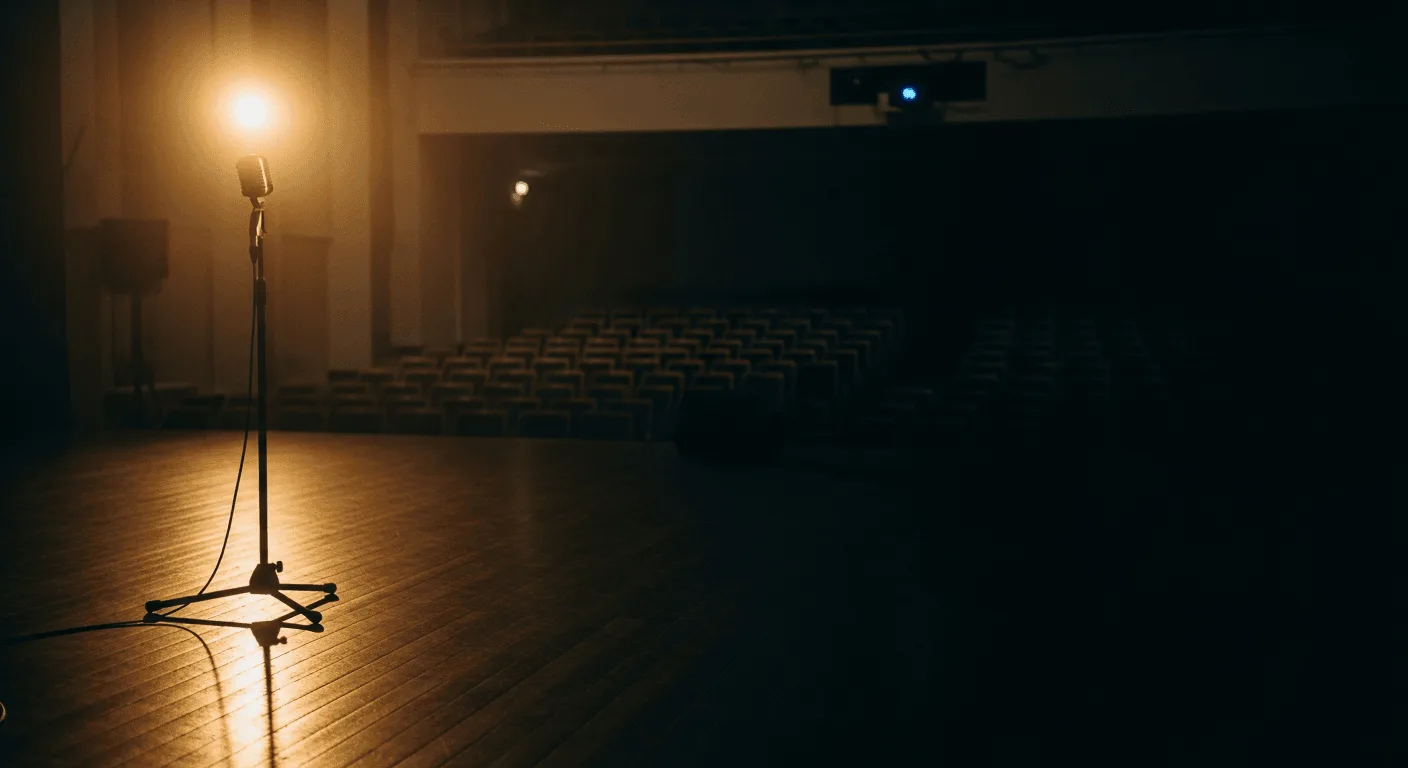
Hypnose bei Auftrittsangst und Lampenfieber | Souverän auftreten
The change

What confident performance energy feels like

The excitement isn't gone — it's just working for you instead of against you.

  • No more avoiding talks and presentations
  • Your voice carries, even in the first sentences
  • Preparation stays accessible instead of vanishing at the crucial moment
  • Performing feels like an exchange, not an exam
For whom

Who is this a good fit for?

Stage fright also affects people with genuinely good communication skills — they just can't access them in certain moments.

  • Racing heart, sweating, or trembling kick in as soon as a performance gets close.
  • You avoid presentations or performances that would actually help your career.
  • In the moment itself, your well-prepared talk suddenly seems to vanish.
  • Other fears — of failure, of judgment — are noticeably tangled up in it.

A bit of stage fright before something important is normal, even useful — that doesn't need therapy. Real blocks and avoidance are the reason to change something.

In a session

What happens in a session

Usually two to five sessions, booked individually — how many you need depends on how deep the block sits and what else is tangled up with it.

  1. 01
    How you see the audience
    Many people with stage fright unconsciously experience the audience as a threat — which makes it entirely logical for the unconscious to sound the alarm. We work on how you face the audience, especially when they're actually acquaintances or colleagues.
  2. 02
    The way into performance trance
    Almost every experienced performer knows a flow state where everything comes easily. It isn't innate — we practice the switch into that state and link it to exactly the situations that used to trigger the fear.
  3. 03
    Your performance self
    What goes on stage doesn't have to be all of you. We build a performance self that stays free of old memories, arguments, or worries that have nothing to do with the performance itself.
  4. 04
    Coming back
    We talk through what shifted in trance and what you'll notice differently at your next performance.
Online or in person

Hypnotherapy for Stage Fright — online or in the practice

Preparing for a performance works well from wherever you can already focus.

Online via video

A quiet spot, a laptop and headphones are enough. Especially once your next performance date is set, an online session is often easier to book on short notice.

More about online hypnotherapy

In person in Zurich

If you'd rather come in person: two practices, in Enge and in Hottingen, both an easy transit ride away.

Serious hypnosis

Serious hypnotherapy for stage fright

Two misconceptions I run into often — and what's actually true.

What people assume

With enough practice and rehearsal, that queasy feeling should eventually disappear on its own.

Serious therapy

Practice helps your preparation, not the unconscious alarm reaction behind it. That's why the feeling often stays, no matter how many times you've given the talk.

What people assume

Nervousness before a performance is fundamentally bad and needs to go.

Serious therapy

The right amount of adrenaline brings your system to peak performance. The goal isn't zero nerves — it's nerves that keep you sharp instead of freezing you.

What people assume

In trance I lose control of myself.

Serious therapy

You stay awake and responsive throughout the entire session. Nothing happens without your consent.

What people assume

Only weak-willed people can be hypnotized at all.

Serious therapy

Exactly the reverse: strong concentration and vivid imagination are the best conditions for it to work well.

Will it work for me?

Yes — with stage fright, it mainly depends how deep the block sits.

Hypnosis works for practically everyone who engages with it. What differs isn't whether it helps, but how fast.

With stage fright, the pace depends a lot on whether one bad performance is behind it, or the fear has built up across many situations over time.

Fast progress
2–3 sessions

A single rough performance got linked to the topic; everything else stays unaffected.

  • one specific triggering moment
  • fear tied to a particular situation
  • otherwise confident communication day to day
The typical case
3–4 sessions

The fear has shown up for a while and across several types of performance.

  • stage fright since school or training
  • affects several situations
  • noticeable avoidance at work
When it runs deeper
5 or more

Fear of failure or self-worth issues are closely tangled with the stage fright.

  • diffuse, long-standing fear
  • linked to fear of failure or judgment
  • avoidance noticeably limits your career

My honest promise: If I'm not convinced after the first session that hypnotherapy genuinely applies here, I'll say so openly instead of just continuing.

Jan Mion – hypnotherapist
Your therapist

About Jan Mion

Jan Mion is a hypnotherapist from Zurich. His approach to stage fright: reaching the optimal inner state for a successful performance — not training the excitement away, but making it usable.

  • Hypnotherapist EZC
  • 1500+ hours of training
  • 5000+ individual sessions
  • In private practice since 2015

Whoever is on stage literally has the floor — even when past experience suggests otherwise.

Investment

Simple, fair pricing

Hypnotherapy session
CHF 200
per session, approx. 60 minutes

After the first session you'll notice whether your relationship to the nervousness has already started to shift.

Good to know

Frequently asked questions about hypnosis for stage fright

What actually helps against stage fright?

Stage fright very often has an unconscious component. A bit of nervousness in front of people is normal — once it becomes excessive, hypnotherapy can help resolve the unconscious causes behind it.

What happens in the body during stage fright?

The unconscious rates the performance as a risk and releases adrenaline — racing heart, trembling or a dry mouth follow. In the right dose that brings you to peak performance; too much, and it blocks you instead.

What causes stage fright?

Often a fear of embarrassment or failure is behind it, sometimes one specific performance that went badly in the past. The unconscious then automatically links the situation with danger.

What if my voice trembles?

A little trembling in the first sentences is normal. If it lasts longer, hypnotherapy helps address the unconscious cause and builds confidence in your own voice.

Why do I get nervous so quickly during presentations?

Some excitement is normal for any presentation. If your unconscious works against you instead of supporting you, that excitement quickly turns into real nervousness — which is exactly where hypnotherapy comes in.

How many sessions do I need for stage fright?

Usually two to five. How many you need depends on whether a single moment is behind it or the fear has built up across several situations already.
Get started

Ready for the first step?

Every path begins with the first step. Book your first session — if it turns out afterwards that this isn't right for you, I'll tell you honestly.

Book an appointment