
The possibilities of hypnosis are far-reaching and diverse. With it, we can—at least theoretically—influence everything that is controlled unconsciously. So it is all the more important to know where the limits of these possibilities lie in the world of hypnosis.
There are sometimes very adventurous ideas about what is possible with hypnosis. Especially in hypnotherapy, there are often expectations that don’t match reality.
So, what exactly can hypnosis not do?
A complete change of self
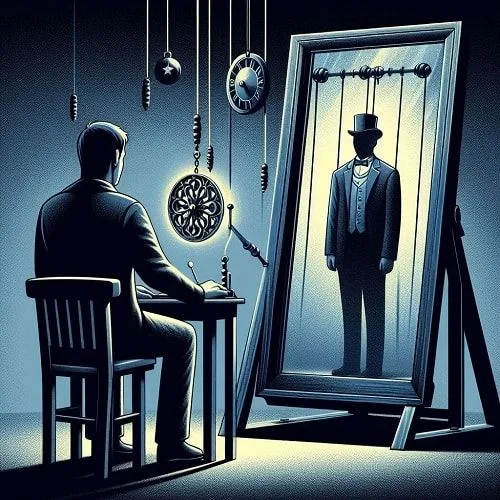
Even though we can use hypnosis to strengthen self-confidence and also resolve fears and depression, it is still not possible to bring about a complete change of one’s character. This doesn’t mean that we can’t change profoundly, but rather that this happens in balance.
If someone uses hypnosis to treat sadness and dejection, for example, that doesn’t mean this person will never be sad or dejected again. But we provide the opportunity to bring those feelings into balance, so that the negative ones don’t take over.
This is especially important to know, because many people divide themselves very one-sidedly into “good” and “bad” parts of the self, and then seek out hypnosis with the impossible desire to “make the bad go away.” There are many people in hypnosis who talk about “reprogramming.” However, this isn’t possible in that way and inevitably leads to disappointment.
Every person has much more potential inside them than they use, and reaching this is enough and is only possible in combination. So the strong can also be gentle, the introvert can also come out of their shell, and the anxious can also be brave. But just not only that.
Treating memory like a movie
Hypnosis is often portrayed as a tool that can play back memories like a movie or even cut out unpleasant ones. Of course, hypermnesia and amnesia are well-known trance phenomena, but our memory is not as clear-cut as people often think.
You can use hypnosis to remember certain things, but this often doesn’t happen directly. Most people don’t have a photographic memory, and those who do usually don’t need hypnosis to remember.
So enhancing memory is more about increasing the probability and directing focus, rather than watching a movie.
Besides, we have the danger of false memories. Because in a hypnotic trance, suggestibility is also increased, and as a result, it is possible to remember things that never even happened.
Deleting unpleasant memories isn’t that easily done, either. Especially when people are heartbroken, they often wonder if they can simply forget someone using hypnosis. However, this isn’t so easily possible. Because the more emotionally significant something was, the harder it is to forget. Usually, reducing the impact of the memories is the more successful approach here.
Instant healing of illnesses

We can use hypnosis to strengthen self-healing powers, resolve confusions in the immune system, such as in the treatment of autoimmune diseases or allergies. However, this is not like taking a pill or flipping a switch. These changes take time and are also not always guaranteed. Our psyche is a system that keeps itself in balance.
Even if hypnosis makes positive change possible in many areas in the first place, they still take time and energy.
Here are four things hypnosis cannot do when it comes to healing severe illnesses:
- Bring about instant healing: Hypnosis cannot offer instant healing for physical ailments like severe illnesses. It does not replace professional medical care and treatment.
- Heal severe illnesses: Hypnosis cannot directly heal severe illnesses. It can support self-healing and steer the psyche in a positive direction. But healing as medicine knows it is only indirectly possible with hypnotherapy.
- Completely replace conventional medicine: Hypnosis is a very good support for medicine and in some cases even the last hope. However, it doesn’t make sense to want to completely replace conventional medicine. Just as the reverse should also be the case. Medicine is well suited for matters of medicine, and hypnosis for matters of health.
Control over your mind
The oldest depictions of hypnosis almost always have something to do with mind control. This is mainly because, in the past, the influence of the unconscious was not fully understood.
So in a hypnotic trance, you don’t hand over control to the hypnotist, but rather to your own unconscious. This can feel like external control to some. However, it is not; only the control of the conscious mind is reduced.
The image of the will-less hypnotized person is only halfway correct if someone truly has no opinion on something. Because with no or weak opinions, people generally like to be convinced. And with hypnosis, this is naturally even more convincing.
Granting supernatural abilities
We can bring people to the limits of their potential with hypnosis coaching and therapy. But not beyond that. The limitations of our own biology still apply even in a hypnotic trance.
The idea that hypnosis leads to supernatural powers or magic is becoming less common, but it is definitely still around.
It takes training for all improvements, and even if hypnosis can make this more efficient, it still cannot replace it.
Bringing about death
Even today, people often search the internet to see if hypnosis can bring about death. This is not possible. We can indeed exert influence on a deep level in hypnosis, but we cannot command the heart to stop beating.
Hypnosis brings us closer to our own nature, not further away from it. And our unconscious is busy keeping us alive, so we cannot convince it of the opposite.
Life-sustaining functions like breathing and heartbeat can indeed be influenced, such as lowering blood pressure, but not into life-threatening ranges.
Hypnotherapy doesn’t always work instantly
Another widespread belief is that hypnotherapy works instantly. Not only in the sense that one session would be enough for all problems, but it is also believed that the maximum effect is achieved immediately after the trance.
If the unconscious already had everything ready to change something, meaning if a certain amount of groundwork has already been done, then it may well be that hypnosis works quickly.
However, it is usually the case that hypnotic changes need a certain amount of time to integrate into everyday life.
Just physically alone, new connections have to form in the brain, and that alone takes time. Besides, this depends on many different factors. If there is no readiness to change something yet, then logically it takes longer.
More on this at How fast does hypnosis work?
Hypnotherapy only affects the problem
“I’m not here to talk about myself, I’m here to lose weight.” This sentence from a client will forever be the symbol for misunderstandings about hypnosis.
Based on her internet research, she thought that she wouldn’t have to change anything in her life at all, but that hypnosis would simply make her slim like a magic pill.
That is, of course, not the case.
A problem or an issue never exists in a vacuum. If we imagine the structure of our brain, we know that everything is networked together. That means if we change one thing, other things change too. And if we want to change a problem, then we also have to be willing to change what is connected to it.
Only if we cultivate a holistic view can we achieve lasting positive changes.
Temporary hypnotic symptom suppression, then, usually doesn’t work permanently.
What is falsely described as impossible with hypnosis
You often read that hypnosis cannot make you do things you don’t want to do. That is nonsense. Hypnosis can absolutely be used to do things you don’t want to do. One’s own will, just like memory, is very malleable in most people. Otherwise, so many people wouldn’t do things that harm themselves.
If you can be made to drink or smoke or take out loans to buy stuff you don’t need through (hypnotic) advertising, then that is certainly also possible with intensive hypnosis.
This is different from the aforementioned “taking control of the mind,” because people who are externally influenced in this way think that they want it themselves.
It’s exactly the same with “You can’t hypnotize someone to kill someone.” Actually, that is absolutely possible, but not with everyone. If you try it with enough people, you will certainly find some who can be persuaded to do it. Because anyone who thinks that humans are completely averse to murder should read up on the history of mankind. Mostly, such applications are based more on self-preservation than on moral concepts. Because extreme behavior also leads to major consequences.
Conclusion
In conclusion, it can be said that hypnosis is a powerful tool that can help people overcome negative habits and achieve positive results. However, it also has its limits.
Hypnosis cannot completely change a person’s personality, instantly heal illnesses, treat memory like a movie, control the mind, or grant special powers.
It is important to have realistic expectations and to discuss your own hopes with a hypnosis professional. If you have questions about the possibilities of hypnosis, you are welcome to contact me: Contact